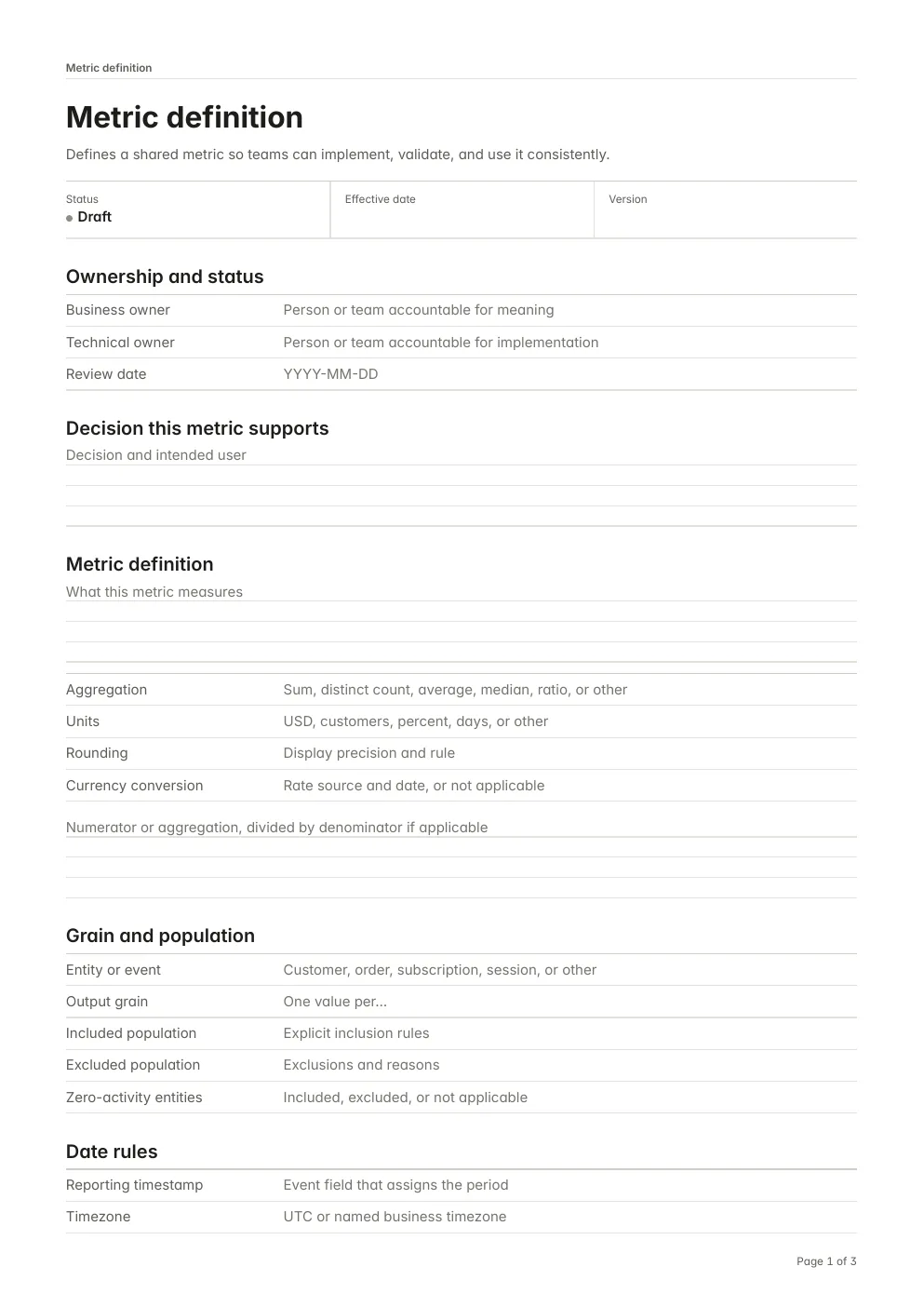
Defines a shared metric so teams can implement, validate, and use it consistently. Use before building a shared KPI, resolving conflicting definitions, or changing a metric with downstream users.
Ownership and statusName who owns the metric's meaning and implementation.
Decision this metric supportsDescribe the decision, alert, workflow, or comparison this metric informs.
Metric definitionExplain the measure in everyday language, without database or field names.
Grain and populationDefine the entity represented by each value and the output level.
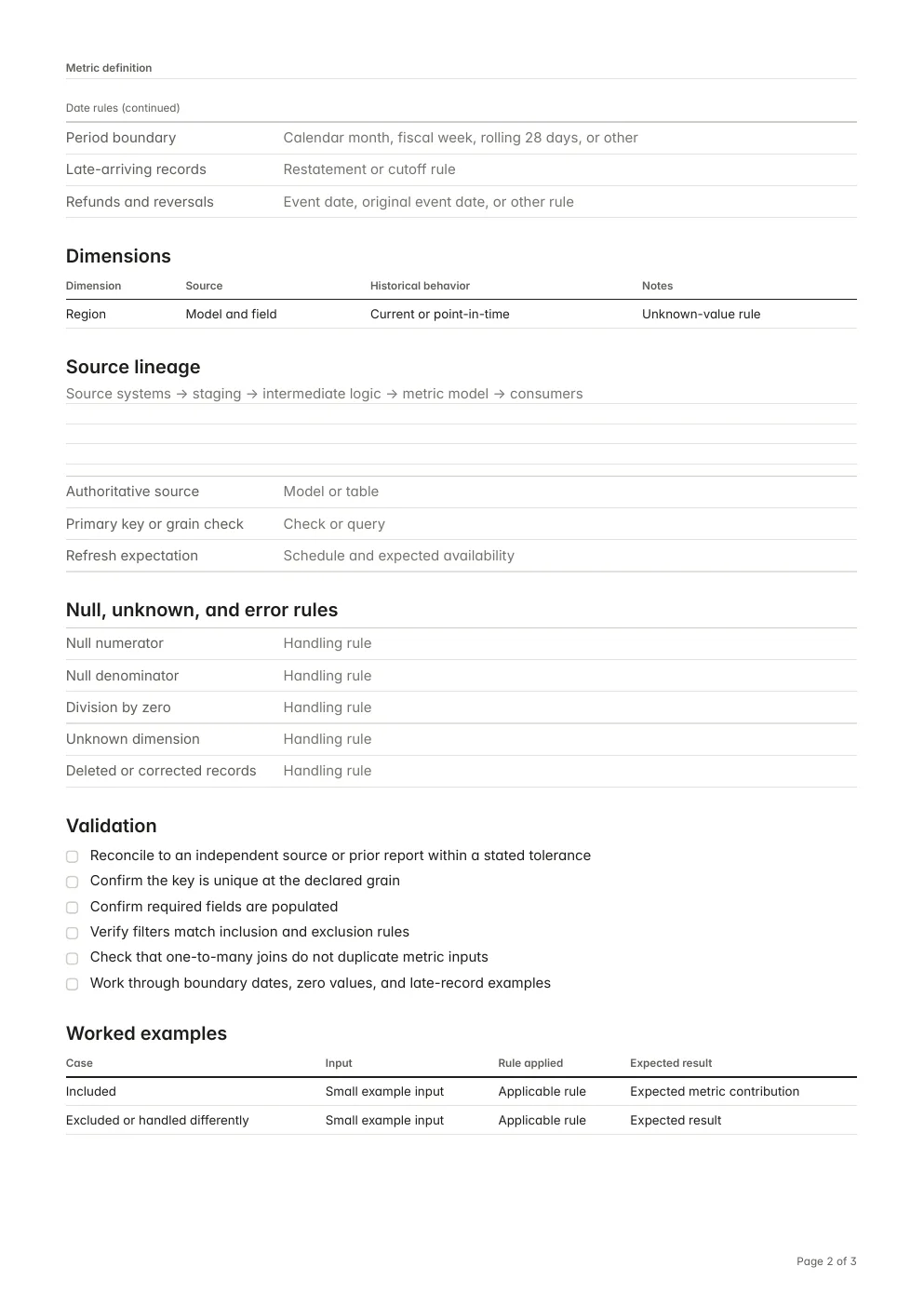
Date rulesSpecify which timestamp assigns a record to a reporting period, the timezone, and the period boundary.
DimensionsList dimensions users may apply to the metric, where each comes from, and whether historical results use current or point-in-time values.
Source lineageTrace the data from its originating systems through transformations to the metric and its users.
Null, unknown, and error rulesSet consistent handling for missing values, zero denominators, unknown dimensions, and records that are deleted or corrected.
ValidationConfirm the definition matches independent results and the declared grain.
Worked examplesShow one small case that contributes to the metric and one that is excluded or handled differently.
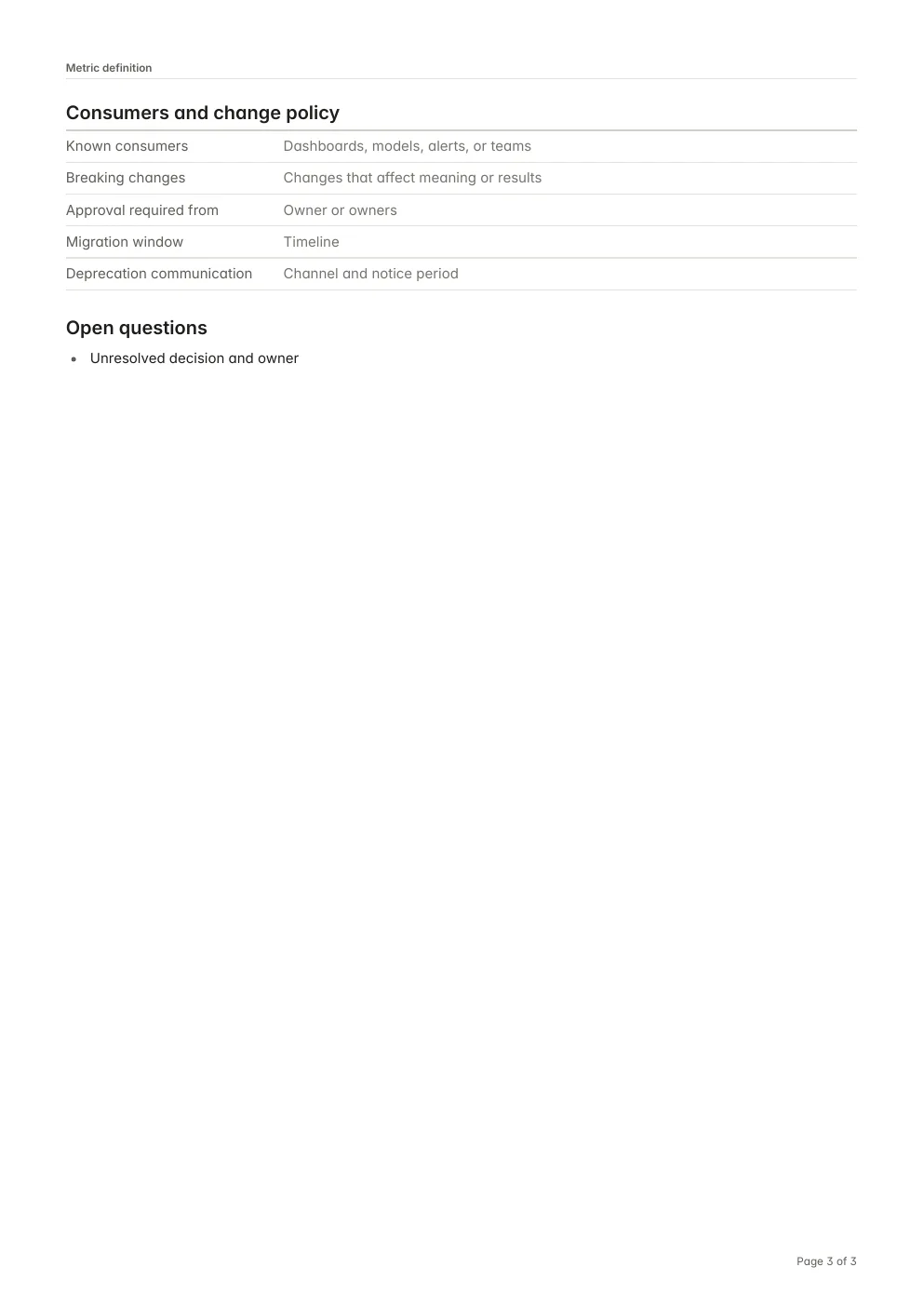
Consumers and change policyList known users and define which changes require approval, a migration period, or advance notice.
Open questionsRecord only unresolved business decisions that block a stable definition.